Dr.Kim's Invisalign guide (Camp Humpreys and Osan Air Base)
Welcome, Camp Humphreys and Osan AB communities! To help you achieve your dream smile during your time in Korea, we have gathered the most common questions our service members and their families ask about Invisalign.
Conveniently located near Camp Humphreys and Osan Air Base, Seoul USC Dental is proud to be one of Korea’s premier Invisalign providers.
Invisalign Success Starts with the Right Orthodontist
Many patients assume that getting Invisalign is as simple as scanning their teeth and a computer automatically generates the perfect smile. In reality, 3D scanning software only creates a raw digital model—it does not possess the clinical wisdom to design a safe, effective, or predictable treatment plan. True orthodontic success relies heavily on your orthodontist’s hands-on expertise and deep understanding of dental mechanics to direct every single tooth movement manually.
A successful outcome comes down to meticulously planning when, how, and in what order each tooth should shift. An experienced orthodontist customizes the precise forces, timing, and sequence of movements required to protect your tooth roots and jaw joint while guiding your teeth into ideal alignment. Invisalign aligners are simply tools; it is the orthodontist’s clinical vision and strategic design behind the screen that craft your ideal, healthy smile.
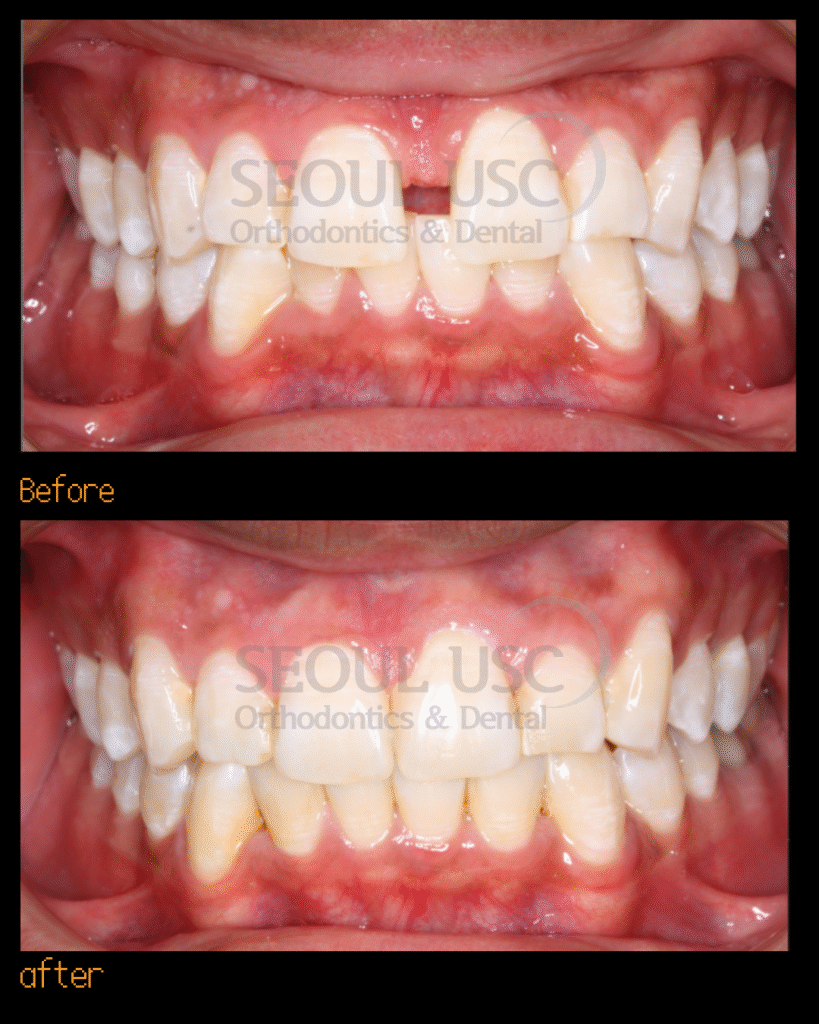
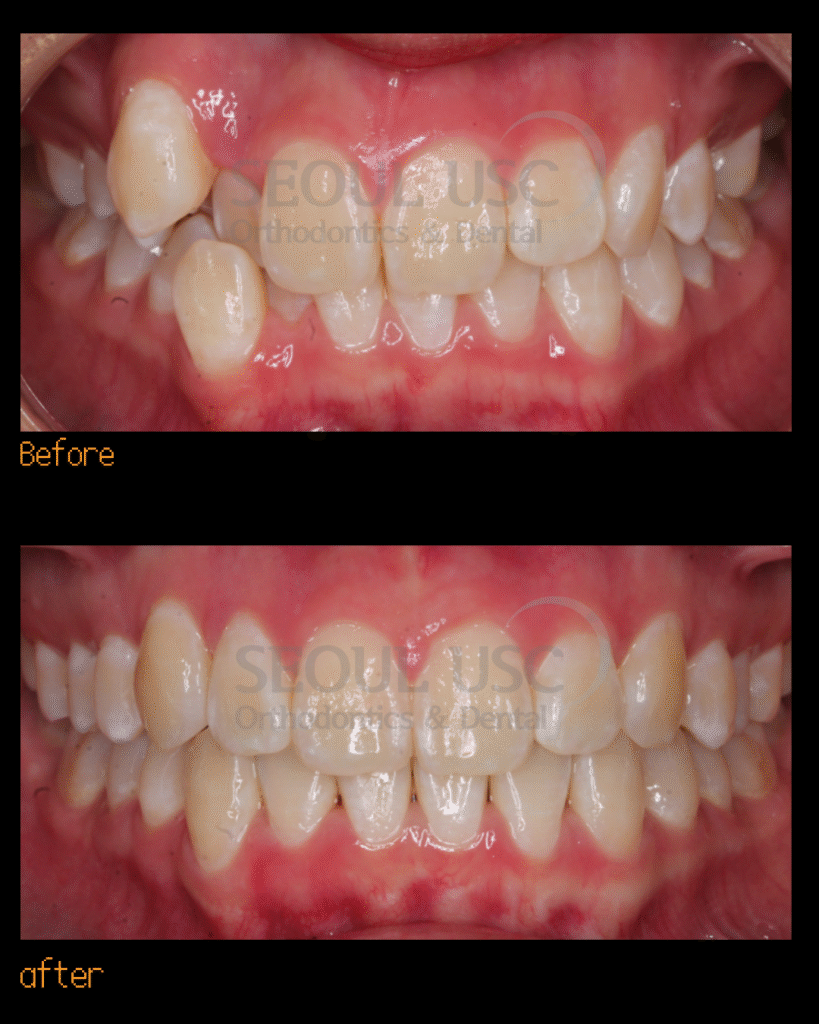
Dr.Kim's Invisalign Case
Gap closure
Crowding
Is Invisalign Right For You? When to Consider Alternatives
-
The Challenge: Clear aligners only work if you wear them for at least 22 hours every single day throughout your treatment.
-
Why It Matters: Taking them out too often stops your progress. If you feel you might struggle to stick to this routine, traditional fixed braces are a much safer and more effective option.
-
The Challenge: Snapping aligners in and out puts a direct, sudden leverage force on your teeth each time.
-
Why It Matters: If your gums or supporting bone are already weak, this repeated force can strain the teeth and even cause them to become loose. Fixed options offer a smoother, more continuous gentle force.
-
The Challenge: Taking your aligners out constantly for quick snacks or drinks allows your teeth to start shifting back during those brief gaps.
-
Why It Matters: Repeatedly forcing aligners back over teeth that have shifted creates erratic pressure—especially on delicate lower front teeth—which can leave them unstable or loose. If you love frequent snacking, mini-braces or conventional braces protect your teeth far better.
A 16-year-old femle. Non-extraction. Palatal expansion was conducted before Invisalign. Mini-screws (temporary anchorage device) was placed to move upper and lower back teeth toward wisdom teeth (Distalization).
Does Invisalign Take Longer Than Traditional Braces?
As long as you wear the Invisalign aligners over 22 hours a day, the treatment time will be the same as the traditional braces.
Can I eat and drink while wearing my aligners?
You should always remove your aligners before eating or drinking anything other than cold water. Hot beverages (like coffee or tea) can warp the plastic shape, and colored drinks can stain the clear aligners. Removing them also prevents sugar and food particles from getting trapped against your teeth, keeping your smile healthy and cavity-free.
Can I Drink Coffee with Invisalign On?
How often will I need to visit the clinic?
Typically, follow-up visits are scheduled once every 4 weeks. Please note that during your second visit, we will be placing your attachments, which may require 40 minutes or more of clinic time.
How many sets of aligners will I receive at each visit?
We typically provide one extra set of aligners beyond what you need for the month (3 to 5 sets of aligners).
What if I decided to change to braces during Invisalign treatment?
In some cases, patients may need to transition from Invisalign to traditional braces. This shift usually happens if a patient struggles to wear their aligners consistently or if the treatment timeline needs to be accelerated to meet a specific deadline. In these situations, if your teeth have already achieved some alignment through Invisalign, we often use mini-braces—which feature a much more compact design than traditional braces.
The key advantage of mini-braces is their low profile, which minimizes irritation to the lips and cheeks. Additionally, by utilizing super-elastic titanium wires, they deliver a gentler force that significantly reduces patient discomfort.
If you need to transition from Invisalign to mini-braces, an additional fee of $100 per arch will apply.
The biggest advantage of Invisalign is the comfort during orthodontic treatment. Wire or braces will not poke your cheek or lips. You don’t have to rush to your orthodontic office to fix broken brackets or wire poking.
You can eat anything with Invisalign. You just need to take out the Invisalign trays when you eat. Invisalign is especially beneficial to adult orthodontic patients.
Why Seoul USC Dental for Invisalign
-
- Expertise in Invisalign
Dr. Kim opened his practice in 2018, building on a 30-month Invisalign training program during his orthodontic residency at St. Louis University. His extensive clinical expertise was highlighted in 2017 when he ranked 10th nationwide in South Korea for the highest volume of Invisalign cases. - Precision Planning with Virtual Tooth Setup
For every patient, a virtual tooth setup plays a critical role in treatment planning. It allows us to meticulously simulate multiple potential outcomes and guide you toward the most optimal alignment for your unique smile. - Combining Invisalign with Precision Resin Bonding
We do more than just straighten your teeth with Invisalign; we elevate your smile’s aesthetics through precision resin bonding, perfecting the symmetry of your front teeth and beautifully resizing peg laterals.
- Expertise in Invisalign